Filter by topic and date
University Students Create Running Code for the Internet
14 Mar 2017
IETF Hackathons embody the IETF’s tradition of running code—testing theories against the realties of implementation, with a goal of accelerating the definition and adoption of protocols and technologies that make the Internet work better.
One of the best things about theses events is the shared success of a broad range of participants, from long-time IETF contributors to those who have never attended an IETF meeting or joined an IETF working group. Of particular note, university students from around the world have been remarkable contributors at the past few hackathons.
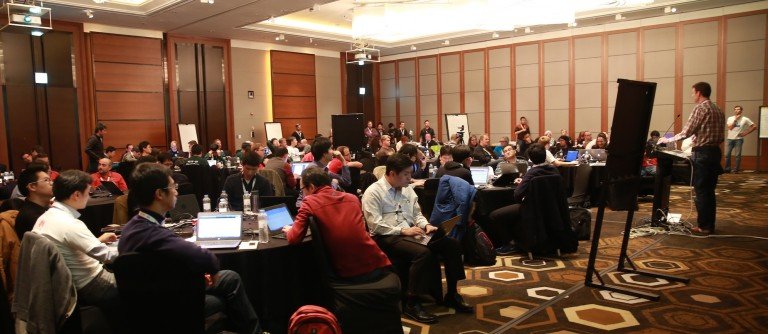
At the most recent IETF Hackathon in Seoul, a team from Sungkyunkwan University worked on implementations of the specifications being defined with the Interface to Network Security Function (I2NSF) Working Group. Powered by energetic professors and students from Sungkyunkwan University in South Korea, the team used RESTCONF and NETCONF together with YANG data models to implement network security services using OpenDaylight and mininet. In doing so, they validated the approach defined by the IETF’s I2NSF Working Group.

Charles Eckel, an Open Source Developer Evangelist for Cisco DevNet, who has led the IETF Hackathons over the past few years, has witnessed first hand how teams with a diverse set of participants often leads to impressive results. Eckel commented, “The most successful hackathon teams are those with a good mix of participants with different skillsets. When you combine IETF newcomers with great coding skills with IETF veterans with tremendous knowledge of evolving Internet protocols—that’s where the magic happens.”
IETF Hackathons provide students with unique learning opportunities as well. Eckel observes, “The mentoring and teamwork that comes from working closely with a group of people on a focused effort over the course of two days is a rich and valuable experience that you are not likely to get merely by reading a few drafts and attending a handful of meetings.”
On numerous occasions, even the hurdle of geography has been cleared by hackathon participants. For example, Ecole Polytechnique de Louvain in Belgium organized two teams working on Multipath TCP during the IETF 97 Hackathon in Seoul. Five participants in Seoul, including three PhD students, worked with 25 students in Louvain-la-Neuve on a new socket API that allows application developers to more easily make use of multipath TCP subflows. Together, the teams received the Best Overall award for the hackathon.
The result confirms Eckel conclusion that, “IETF Hackathons are great events for both long-time IETFers and well as newcomers. “
The next IETF Hackathon will be held in Chicago on 25-26 March 2017. As Eckel notes, “For someone with coding skills and an interest in working on the Internet, IETF Hackathons provide opportunities to get plugged into a project and immediately start producing tangible results.”
For more information, and details about participation, see: https://www.ietf.org/hackathon/